01
Manual underwriting caps origination capacity
Each application takes a senior analyst hours to assemble: bureau pulls, statement classification, memo drafting, policy checks. The queue grows faster than the team that clears it.

CoreFi runs the full lending lifecycle: intake, scoring, offer, contract, disbursement, servicing, restructuring, collections. All on a real-time core with the Lending Agent preparing every case under policy. Ship a bigger book without a proportional growth in headcount, reconciliation or audit risk.
Intake to collections, agent-prepared, underwriter-decided. One ledger, one audit record.
Specialty digital lenders, BNPL, SME credit, factoring, P2P platforms and FIs running direct lending as a non-core line all hit the same wall around the same growth threshold. The bottleneck is rarely demand; it is the per-file work that scales linearly with the book.
Each application takes a senior analyst hours to assemble: bureau pulls, statement classification, memo drafting, policy checks. The queue grows faster than the team that clears it.
36–72 month tenors mean payments, late-fee handling, transaction reconciliation, accounting entries, borrower communications and audit-quality recordkeeping for the full life of every loan.
KYC/KYB, source-of-funds, affordability assessments, ECSPR or MCD documentation, AML monitoring: every file carries an evidence pack the supervisor will eventually ask for. Maintaining that pack manually does not scale.
Each new geography means a new credit bureau, a new open-banking provider and a new affordability framework, layered on top of an integration stack that was already brittle.
Origination on one system, servicing on another, accounting on a third. Reconciliation breaks every month-end; the audit trail spans three vendors with three definitions of "the customer".
Growth-stage lenders end up running contact centres and exception desks instead of credit and product teams. Wrong unit economics, wrong skills mix, wrong board narrative.
CoreFi runs the full loan lifecycle on one platform. The Lending Agent prepares the case, reads the file, drafts the memo, proposes a limit and pricing, and your underwriter decides. Every step writes into the same ledger and the same audit record.
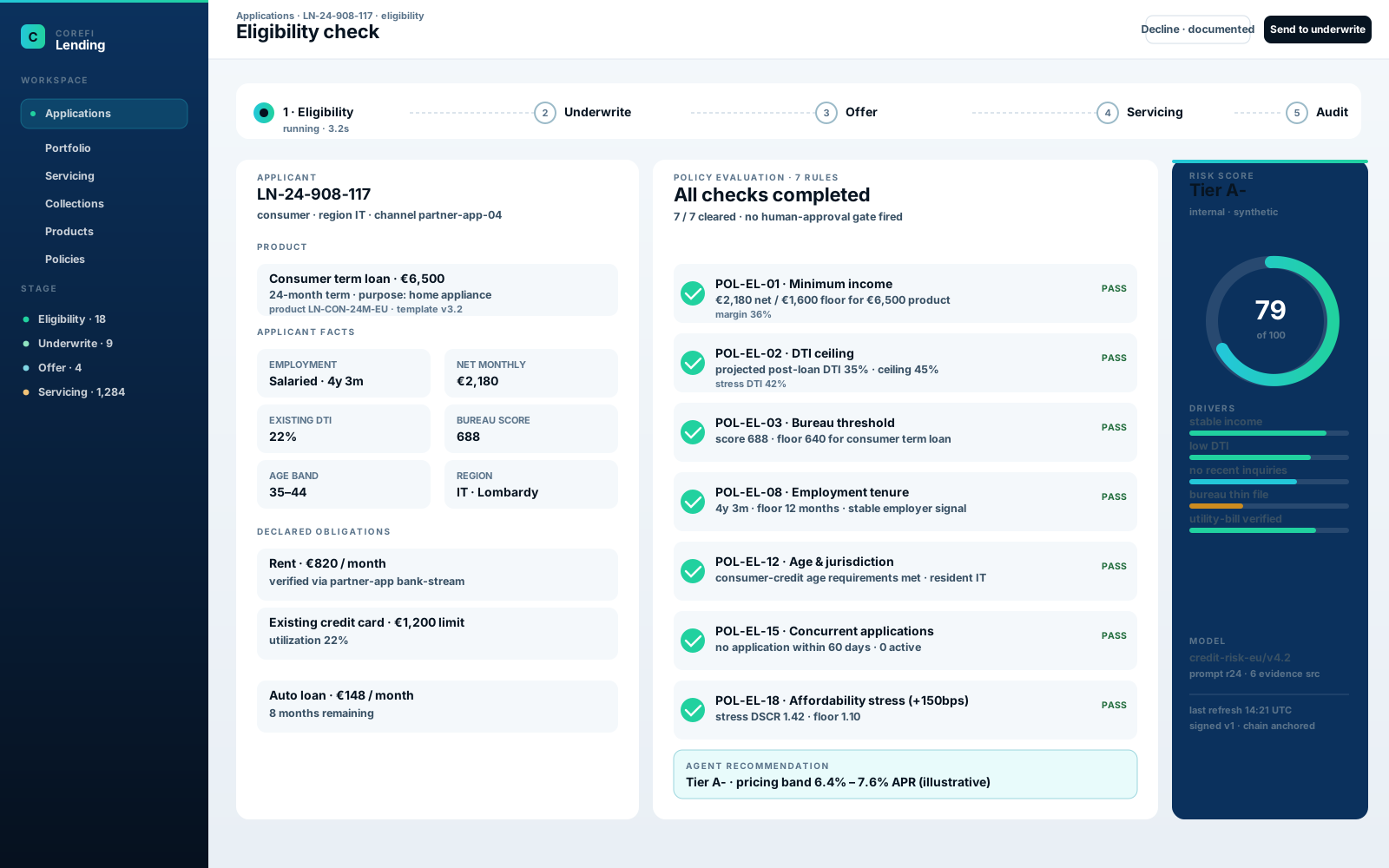
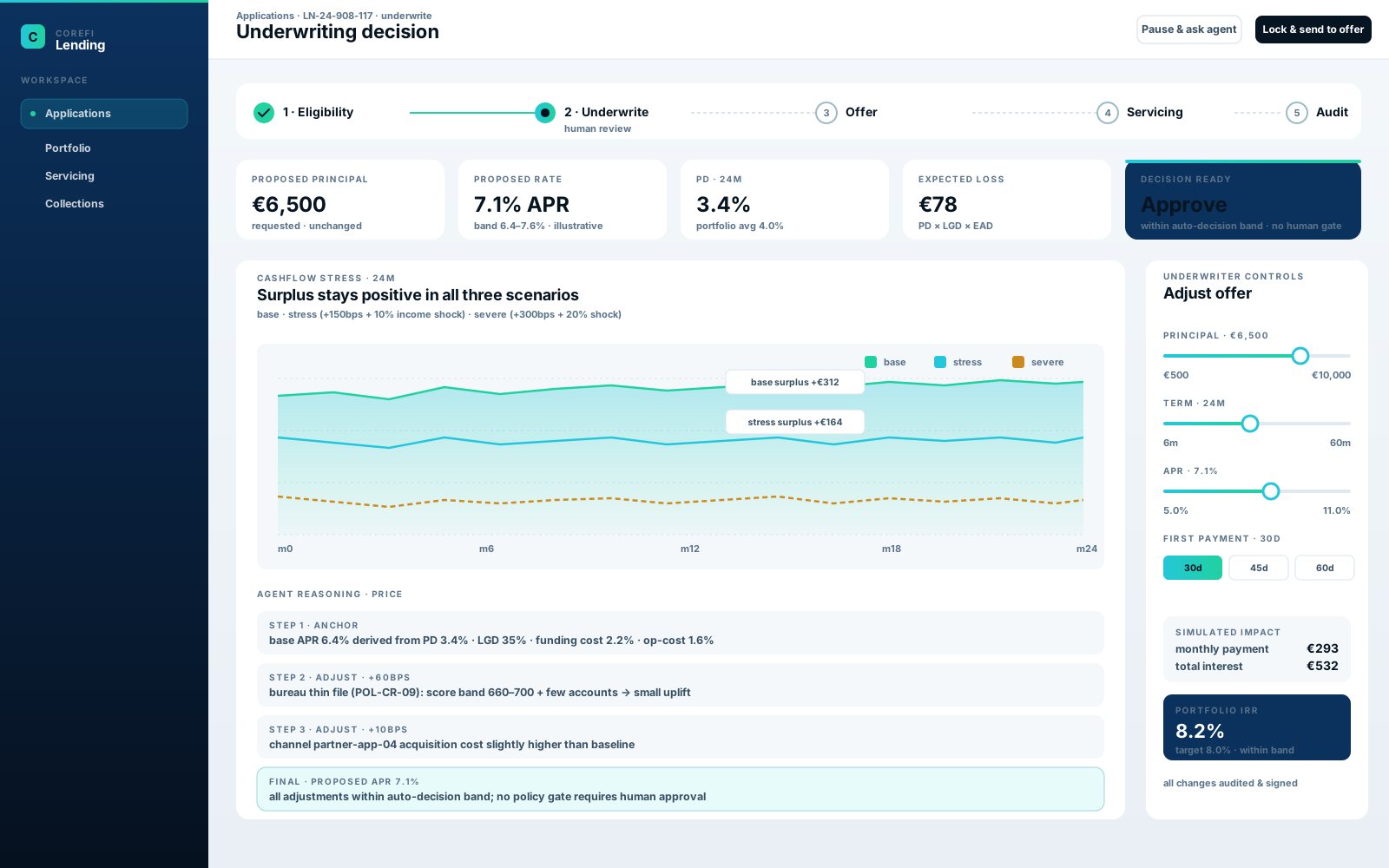
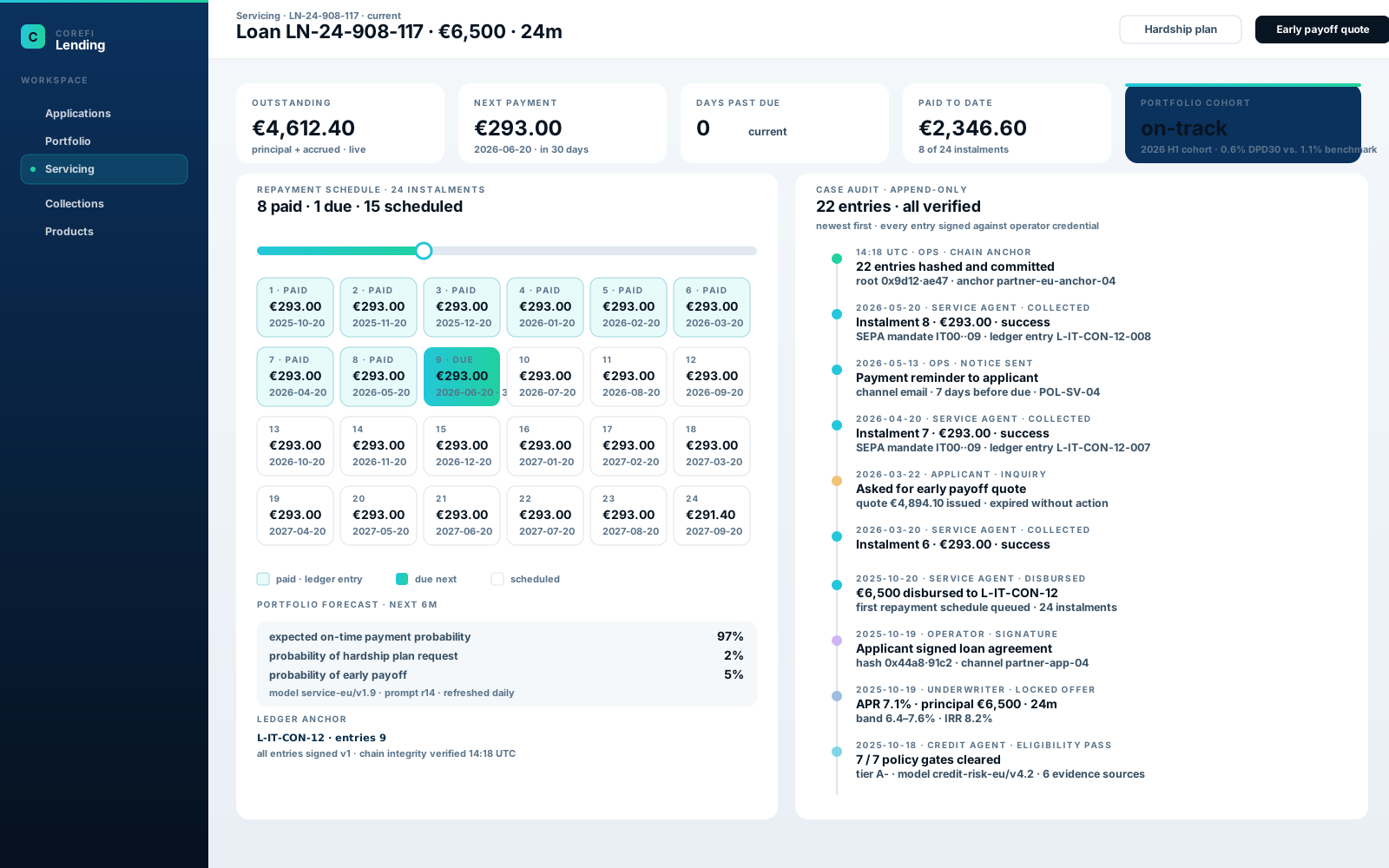
Eleven stages on one platform: intake, documents, scoring, offer, approval, contract, disbursement, repayment, restructuring, collections, portfolio. Configurable workflows; agent-assisted; underwriter-decided.
The Lending Agent pulls bureau, open-banking and internal data; classifies bank statements; extracts revenue and obligations; drafts the underwriting memo and proposes the limit. It never approves a loan; the underwriter does, every time, above policy thresholds.
The loan account lives in the same real-time ledger as origination and servicing. No three-vendor reconciliation; one source of truth for the auditor and the regulator.
KYC, KYB, AML, document and consent workflows wired into the credit application. Beneficial owners extracted on KYB; missing items requested in one structured ask; high-risk cases routed to a human reviewer.
Embed lending into broker portals, partner apps and SaaS journeys with scoped API tokens, without building a separate stack and without losing the audit trail.
Disburse and collect across EU markets on the same rails the rest of CoreFi runs on, with FX, settlement and reconciliation in the same ledger.
All five CoreFi adoption paths are documented in /implementation. Three of them are the natural starting points for digital lenders depending on whether you are launching from scratch, bolting lending onto an existing FI, or handing operations to CoreFi.
Greenfield digital lender. CoreFi is the system of record from day one: loan accounts, ledger, lending workflows and the Lending Agent all on CoreFi APIs. First production customer in 12–20 weeks.
Use when you are building a new lending proposition end-to-end.
Lending as a single new product line on an existing FI. CoreFi runs the lending journey end-to-end and writes back to the legacy core. First borrower in 8–14 weeks.
Use when lending is a non-core line of an asset manager, corporate-finance house or commercial bank that wants the platform without rebuilding it.
CoreFi-operated platform; you keep the customer, the brand and the licence. CoreFi runs infrastructure, releases, monitoring, AI workflow tuning and second-line servicing operations under SLA. First customer in 10–16 weeks.
Use when you want a regulated lending proposition live without standing up an internal core-banking and servicing team.
A regulated financial institution running direct lending as a non-core line, primary business in asset management and corporate finance, deployed CoreFi Lending-as-a-Service on the Core Banking Engine to operate a growing loan book without diverting capital or hiring a servicing team. The story is published anonymized on /client-outcomes; the metric ranges below are the customer's own measurement.
Modules used: Core Banking Engine, Lending Automation (LaaS), Customer Onboarding, Headless APIs, White-Label Channels. Region: European Union. Implementation timeline: roadmap and platform set-up in weeks; phased cutover with the customer's team trained on the LaaS console before live traffic.
No. The agent reads the file, drafts the memo, proposes a limit and pricing and waits at the gate. Every credit decision above policy thresholds requires a human underwriter sign-off before the offer is issued. The audit log shows exactly what changed between the agent's draft and the final decision.
Yes. Use CoreFi's defaults, plug in your own models, or run both for parallel benchmarking. Decisions are explainable per application, with the model and prompt version recorded in the audit trail.
All on the same platform, all rebooked in the same ledger. The agent can propose actions; the operator approves under policy. Collections workflows cover messaging, repayment plans, escalation paths and hand-off to specialised teams or external partners.
One platform with jurisdiction-aware policy rules, bureau and open-banking connectors per market, and consolidated reporting across the book. Each market is a configuration, not a separate stack.
Pricing tracks the adoption path. Launch New and Modernize One Journey are usage-based on accounts and workflows. Managed Platform is an SLA-backed service contract for lenders that want CoreFi to run the platform on their behalf. We will scope it with you on the first call.
Bring your current origination volume, the product types you run (consumer, SME, real-estate, factoring, BNPL), the markets you serve and the constraints you cannot move. We will tell you which adoption path fits, which modules you need and what the first 90 days look like.