Platform / Architecture

The architecture behind an Agentic AI Cloud Core Banking platform.

One platform read four ways: the logical model of cores, workflows and the AI governance plane; the deployment shapes institutions choose between; the integration surface upstream and downstream systems plug into; and the security and trust boundary that holds it together. The architecture reference behind the use cases — for the CIOs, Heads of Engineering and VP Architecture teams scoping a CoreFi deployment.

See platform overview
Logical architecture

Five agents on a cloud-native core, wired through one governance plane.

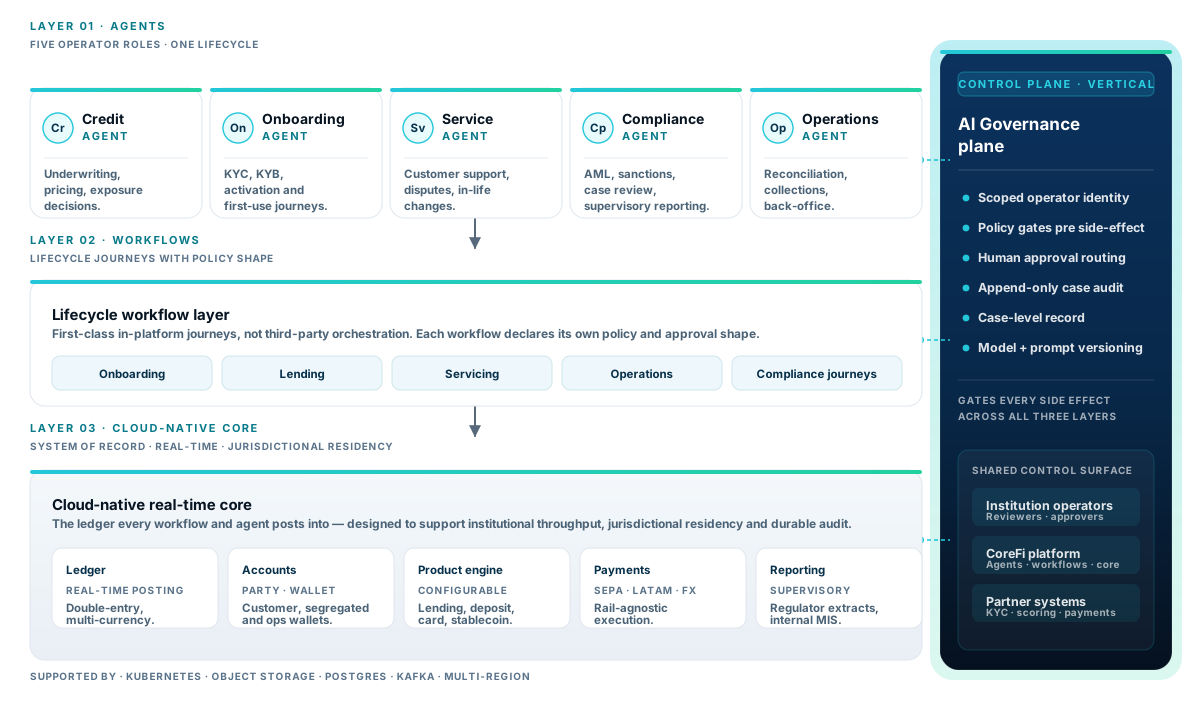
CoreFi’s logical model is three horizontal layers and one vertical control plane. A cloud-native real-time core sits at the base — ledger, accounts, product engine, payments and reporting. The lifecycle workflow layer above it turns the core’s primitives into onboarding, lending, servicing and operations journeys. Five agent roles — Credit, Onboarding, Service, Compliance and Operations — operate those workflows. None of them touch the ledger directly: every action passes through the AI Governance plane that enforces scoped identity, policy gates, human approvals and a case-level audit record.

CoreFi logical architecture: a cloud-native real-time core at the base, a lifecycle workflow layer in the middle, five agent roles (Credit, Onboarding, Service, Compliance, Operations) at the top, all wired through a vertical AI Governance plane that enforces permissions, policy gates, human approvals and audit.
01

Core layer

Real-time ledger, accounts, wallets, product engine, payments and reporting. The system of record every workflow and agent posts into — designed to support institutional throughput, jurisdictional residency and a durable audit trail.

02

Workflow layer

Onboarding, lending, servicing, operations and compliance as first-class workflows inside the platform — not afterthoughts bolted on via third-party orchestration. Each workflow declares its own policy and approval shape.

03

Agent layer

Five operator roles — Credit, Onboarding, Service, Compliance, Operations — running the same Sense → Plan → Check → Act → Record → Escalate → Learn lifecycle. Roles differ by scope, not by mechanism.

04

AI Governance plane

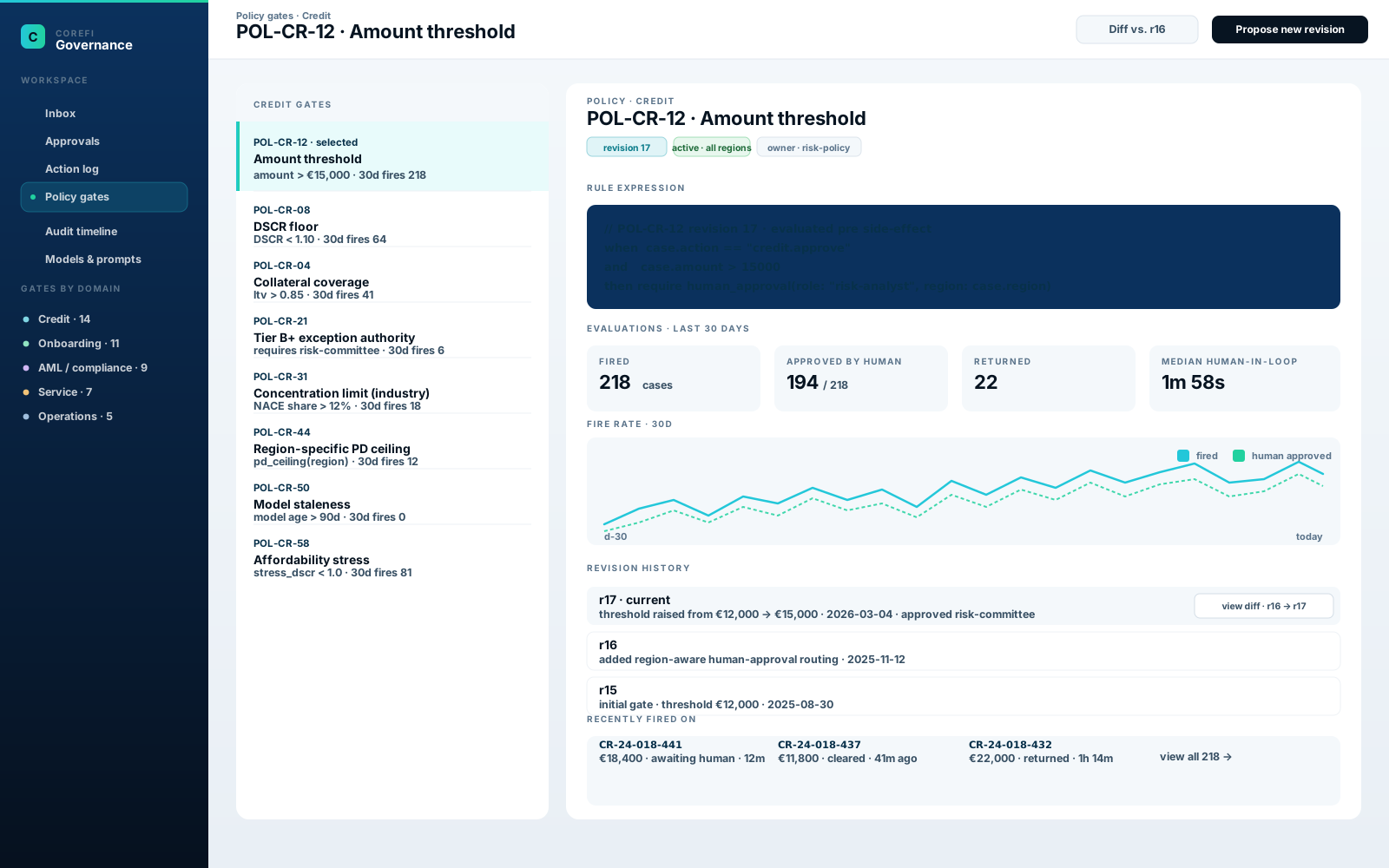
The control surface running alongside every layer: scoped identity per caller (human, system or agent), policy gates evaluated before any side effect, approval routing into reviewer queues, and an append-only case-level audit record keyed to the case and the model version.

Deployment architecture

One platform, three deployment shapes — matched to the institution’s isolation and residency profile.

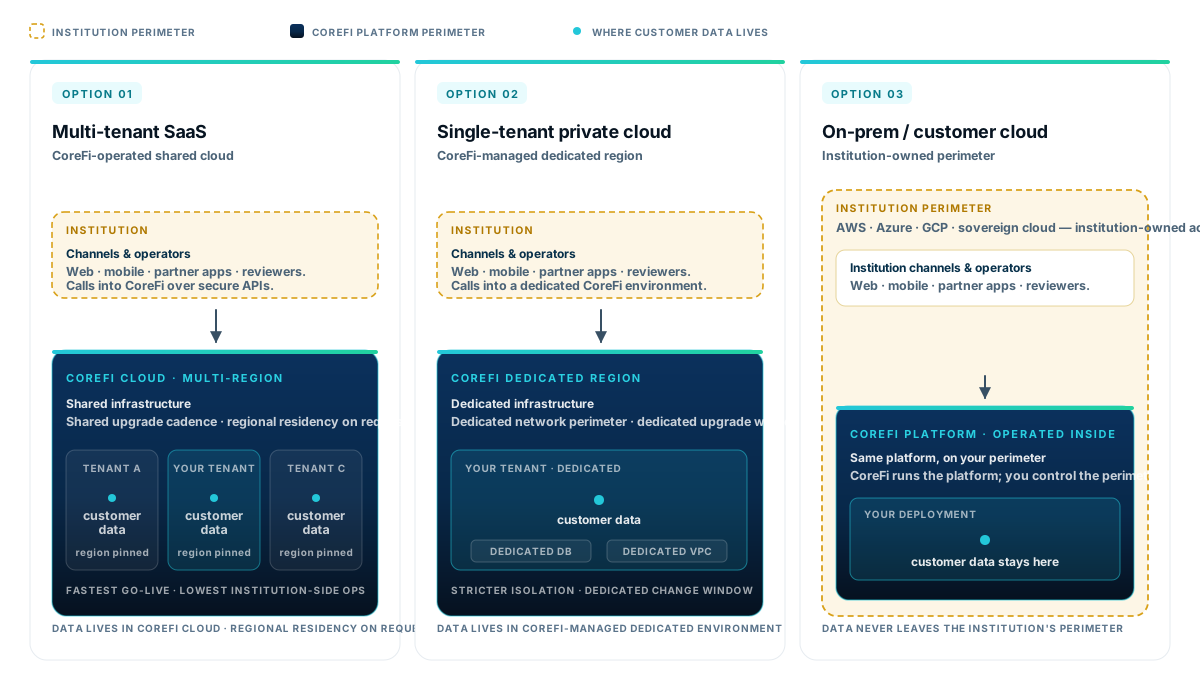
CoreFi runs as one platform across three deployment shapes. The shape determines who operates the infrastructure, where customer data lives and how much of the control plane the institution owns end-to-end. The application surface, the workflow layer and the governance plane do not change between shapes — only the perimeter does.

CoreFi deployment options side by side: multi-tenant SaaS (CoreFi-operated shared cloud, fastest go-live, regional residency on request), single-tenant private cloud (CoreFi-managed dedicated region, dedicated database and upgrade window), and on-premises or customer-cloud deployment (CoreFi platform inside the institution's own perimeter — AWS, Azure, GCP or sovereign cloud, available on request).
01

Multi-tenant SaaS

CoreFi-operated cloud, shared infrastructure, shared upgrade cadence. Fastest go-live and the lowest operational footprint on the institution side. Regional residency is configured per tenant and available on request.

02

Single-tenant private cloud

Dedicated CoreFi-managed deployment in a chosen region: dedicated database, dedicated network perimeter, dedicated upgrade window. Designed to support institutions with stricter isolation, change-control and continuity requirements.

03

On-prem / customer cloud

CoreFi deployed inside the institution’s own cloud account (AWS, Azure, GCP) or sovereign-cloud region. The institution controls the perimeter; CoreFi operates the platform on it. Available on request, with a joint operating model agreed up front.

Integration surface

The surface upstream and downstream systems plug into.

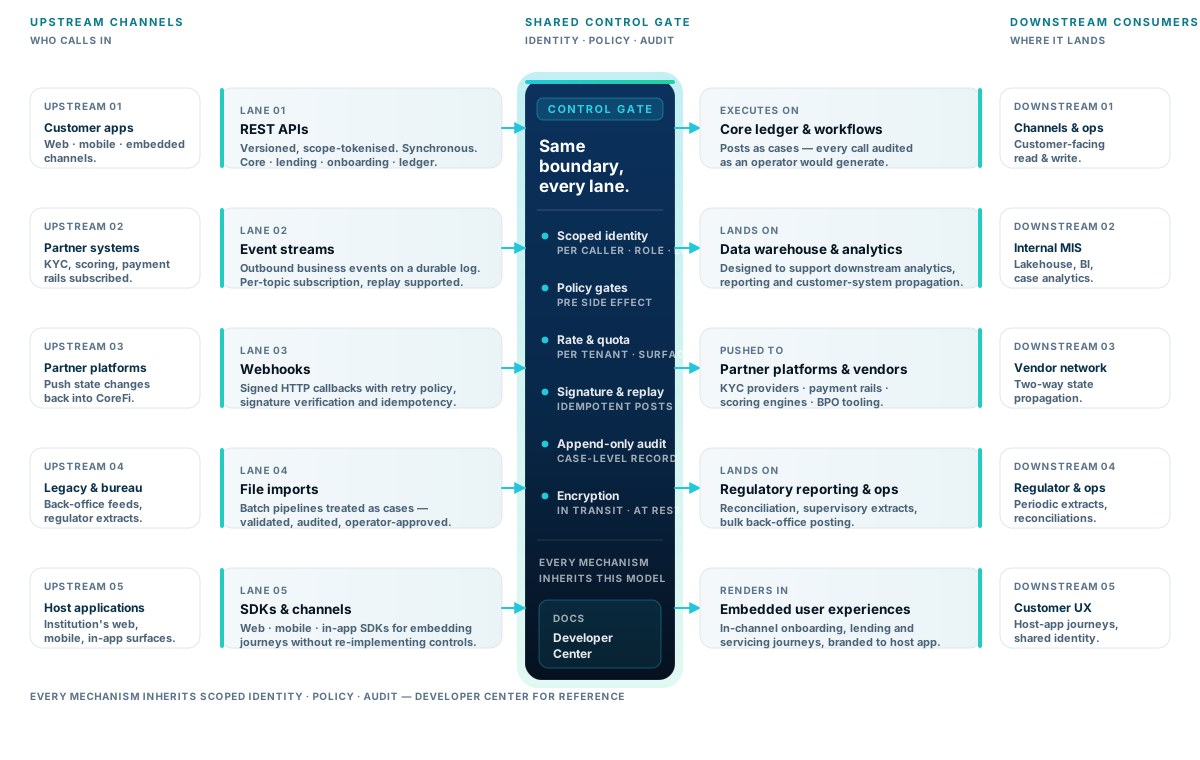
Banks and digital lenders do not run CoreFi in isolation: it sits between channels, partners, vendors and downstream systems of record. The integration surface exposes five complementary mechanisms — REST APIs for synchronous calls, event streams for asynchronous propagation, outbound webhooks for ecosystem partners, file-import pipelines for batch sources, and SDKs for in-channel embedding. Each mechanism inherits the same identity, policy and audit model as the rest of the platform.

CoreFi integration surface: REST APIs (synchronous core, lending, onboarding endpoints), event streams (outbound business events), webhooks (partner notifications), file-import pipelines (batch sources for legacy and regulatory data) and SDKs (in-channel embedding) — each mechanism inherits the same scoped identity, policy gates and audit model from the AI Governance plane.
01

REST APIs

Versioned, scope-tokenised endpoints across core, lending, onboarding and ledger surfaces. Every call is identified, policy-checked and audited inside the same case record an agent or operator would generate.

02

Event streams

Outbound business events across account, transaction, application and case lifecycles. Consumers subscribe per topic and replay from a durable log — designed to support downstream analytics, regulatory reporting and customer-system propagation.

03

Webhooks

Signed HTTP callbacks for partner platforms — KYC providers, payment rails, scoring engines — to push state changes back into CoreFi. Retry policy, signature verification and idempotency are first-class parts of the surface.

04

File imports

Batch pipelines for legacy back-office feeds, regulator extracts, bureau files and bulk operational uploads. Each file is treated as a case: validated, audited and routed to operator approval where policy requires it.

05

SDKs & channels

Web, mobile and in-app SDKs for embedding CoreFi journeys inside the institution’s channels — without re-implementing identity, policy or audit on top.

06

Developer Center

API reference, integration patterns, sandbox tenancy and migration recipes live in the Developer Center. Architecture teams typically start there for the surface-level shape before scoping a deployment.

Security & trust boundary

Where the institution’s perimeter ends and CoreFi’s begins — and how the AI governance plane sits across both.

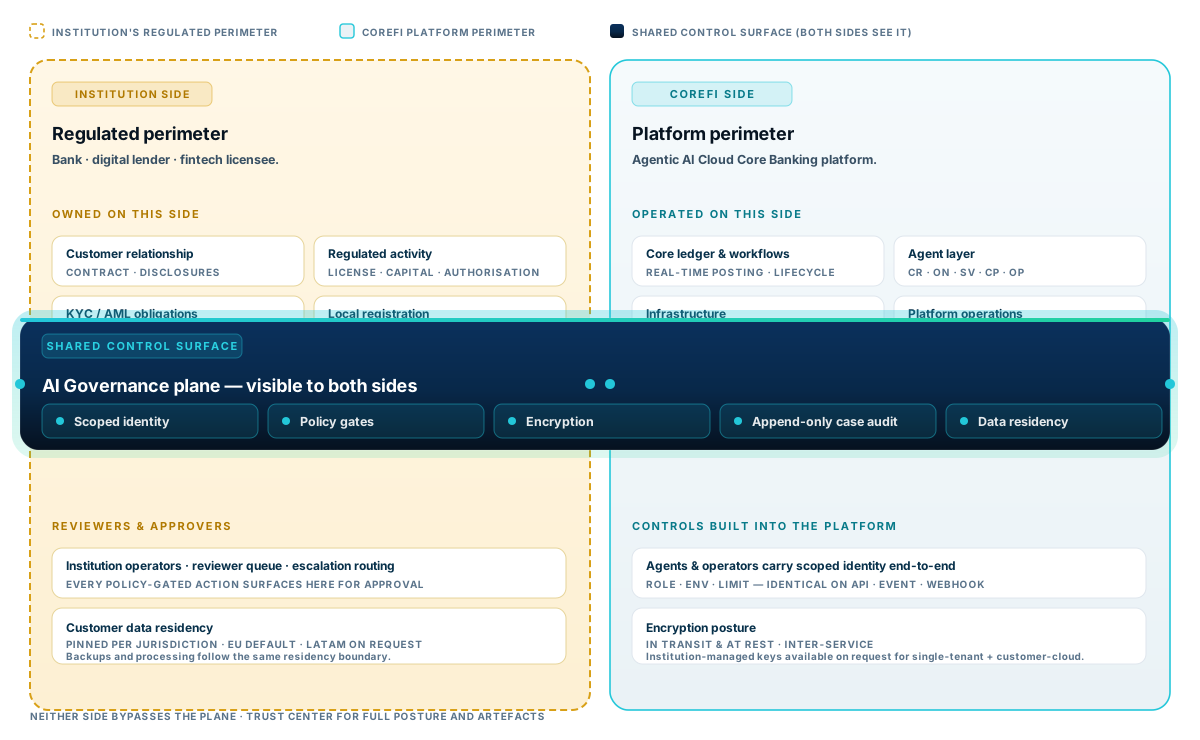
Security at the architecture layer is not a checklist of certificates; it is a boundary diagram. The institution owns the customer relationship and the regulated perimeter. CoreFi operates the platform within it. The AI Governance plane is the shared control surface that both sides see: scoped identity for every operator (human, system or agent), policy gates evaluated before any side effect, encryption in transit and at rest, audit records pinned to the case and the model version, and data-residency boundaries that follow the deployment shape.

CoreFi security and trust boundary: the institution's regulated perimeter on one side, CoreFi's platform perimeter on the other, with the AI Governance plane as the shared control surface — scoped identity per operator (human or agent), policy gates before any side effect, encryption in transit and at rest, append-only case-level audit, and data-residency boundaries that follow the deployment shape.
01

Data residency

Customer data and audit records pinned to a chosen jurisdiction — EU-resident by default, LATAM and other regions available on request. Backups and processing follow the same residency boundary as the primary record.

02

Case-level audit

One append-only record per workflow: trigger, retrieved data, model and prompt version, plan, policy outcome, API calls, side effects, escalations, human decisions, final state — designed to support internal, external and supervisory review. Cryptographic hash-chain verification is wired today for AI Assistant tool calls; per-workflow extension is on the roadmap.

03

AI governance gates

Policy gates evaluated on every step before any side effect: role permissions, customer consent, transaction and exposure limits, AML and sanctions filters, model-output guardrails, jurisdictional restrictions. Failed checks stop the workflow.

04

Encryption posture

Encryption in transit and at rest across customer data, audit records and inter-service traffic. Key management is integrated with the deployment shape — institution-managed keys available on request for single-tenant and customer-cloud deployments.

05

Scoped operator identity

Every caller — human operator, partner system or AI agent — gets a scoped identity with role, environment and limit attached. The same identity carries through API, event and webhook surfaces.

06

Trust Center

Security posture, sub-processor list, third-party attestations where they apply and supporting artefacts are tracked in the Trust Center. Architecture teams under NDA can request the full pack as part of a scoping conversation — available on request.

Coexistence with legacy systems

CoreFi rarely replaces a core on day one — and the architecture reflects it.

Most CoreFi deployments run alongside an existing core for a defined coexistence window: a strangler-fig boundary, a synchronisation path, an event-based view of the legacy system and a migration shape sized to the institution’s appetite. The coexistence story is its own architectural conversation — too big for a section on this page. Walk the dedicated Migration & Coexistence reference for the strangler-fig pattern, the four phases (Discovery → Shadow → Parallel → Cutover) and the risk envelope per workflow. The five adoption paths on the Implementation page cover the same ground at the deployment level.

Walk the architecture with the team that operates it.

A 60-minute working session with CoreFi’s architecture team: the four diagrams against your environment, a sketch of the deployment shape that fits your perimeter, and an integration surface mapped to your upstream and downstream systems.

See platform overview