For Executives / For Compliance & Risk

Govern AI the way you would govern any other operator.

Your supervisor does not trust AI by default — and you have asked the same questions yourself. Who authorised this action? Under what policy? What did the model actually do? Where is the evidence? CoreFi is designed to support compliance and risk officers governing AI workflows the way they already govern human operators — scoped permissions, transaction limits, policy gates, human-approval thresholds and one immutable audit record per workflow, available on request.

See Security & Compliance →
What we hear from CCROs and CROs

Three things you have to be able to say "yes" to.

Whatever your jurisdictional perimeter — banking, payments, electronic money, consumer credit, asset-tokenization — the supervisor's questions about AI rhyme. CoreFi is designed to support compliance and risk teams who need to be able to say "yes" to the three below without crossing the vendor-into-licence line.

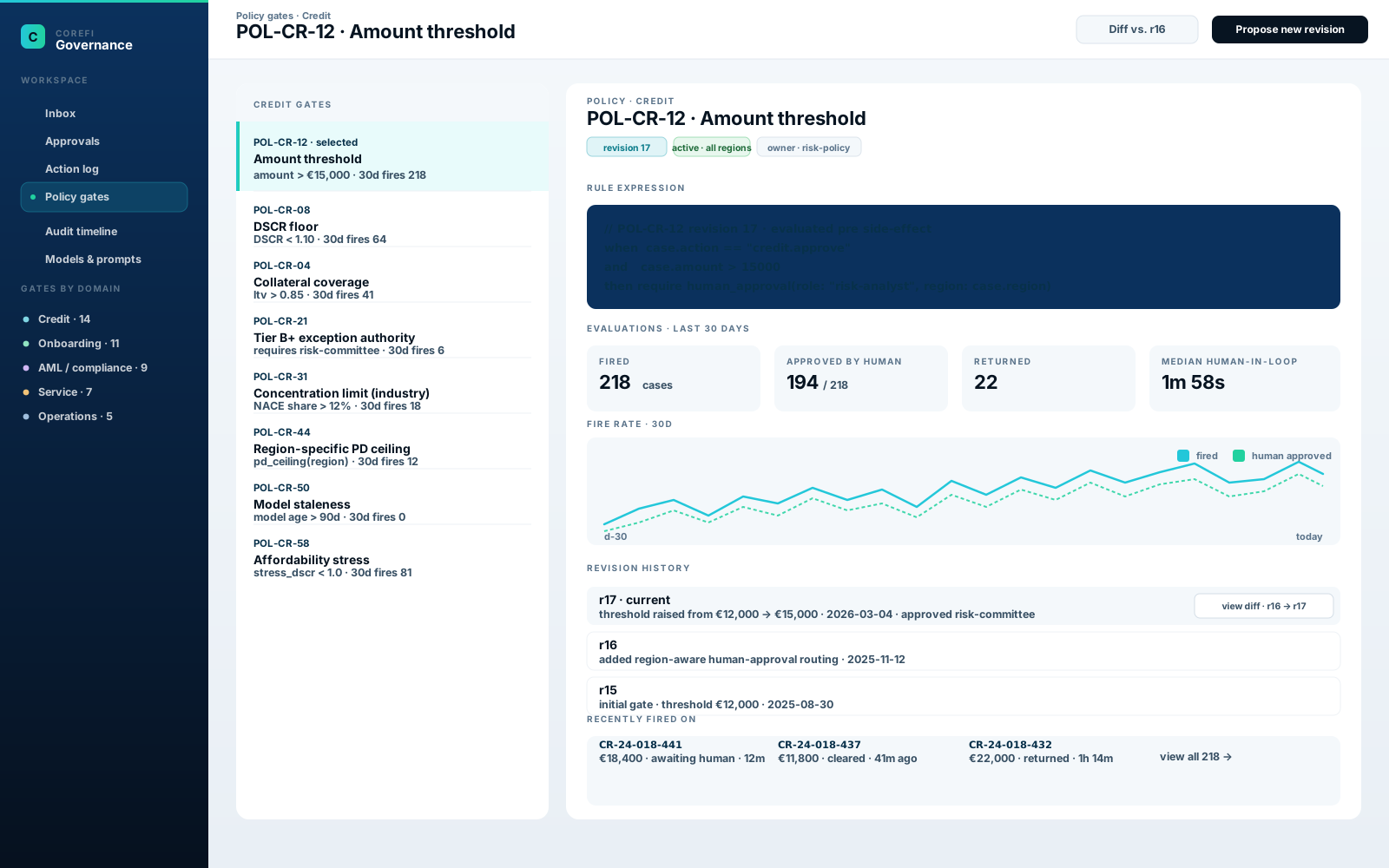
Policy gates console: rule expression, revision history, evaluation stats and recently fired cases for POL-CR-12 amount threshold. Illustrative data.
Policy gates — versioned rules with evaluation history, defined ahead of the workflow. Illustrative data.
01

Can you tell me what the model was allowed to do?

An agent without a written authority is an agent your supervisor cannot accept. CoreFi treats every agent like any other operator: scoped API tokens, role permissions, transaction limits, customer-segment rules and jurisdictional restrictions, defined ahead of the workflow.

The agent's scope is documentary, not implicit — available on request alongside the rest of the policy pack.

02

Can you show me what the model actually did?

Every CoreFi workflow produces one immutable audit record: trigger, retrieved data, model and prompt version, plan, policy outcome, API calls, ledger effects, escalations, human decisions, final state.

The same record covers human and agent workflows, so a supervisor reviewing an AML case or a credit decision sees the full chain — not a model summary and a separate spreadsheet.

03

Can you stop it doing something you have not authorised?

Policy gates run between the agent's plan and any side effect. Anything outside the scoped permission, the transaction limit, the segment rule or the jurisdiction is refused at the gate, with a structured reason and an escalation path.

For decisions that policy says a human must take, the agent prepares the case and the human approves — the audit record covers both.

How CoreFi governs an AI agent

Sense → Plan → Check → Act → Audit → Escalate → Learn.

Every CoreFi agent runs through the same seven-step lifecycle, on the same governed platform, with the same audit record. The lifecycle is designed to support a compliance and risk function that has to answer for what the agent does — not absorb a black-box system that operates outside their perimeter.

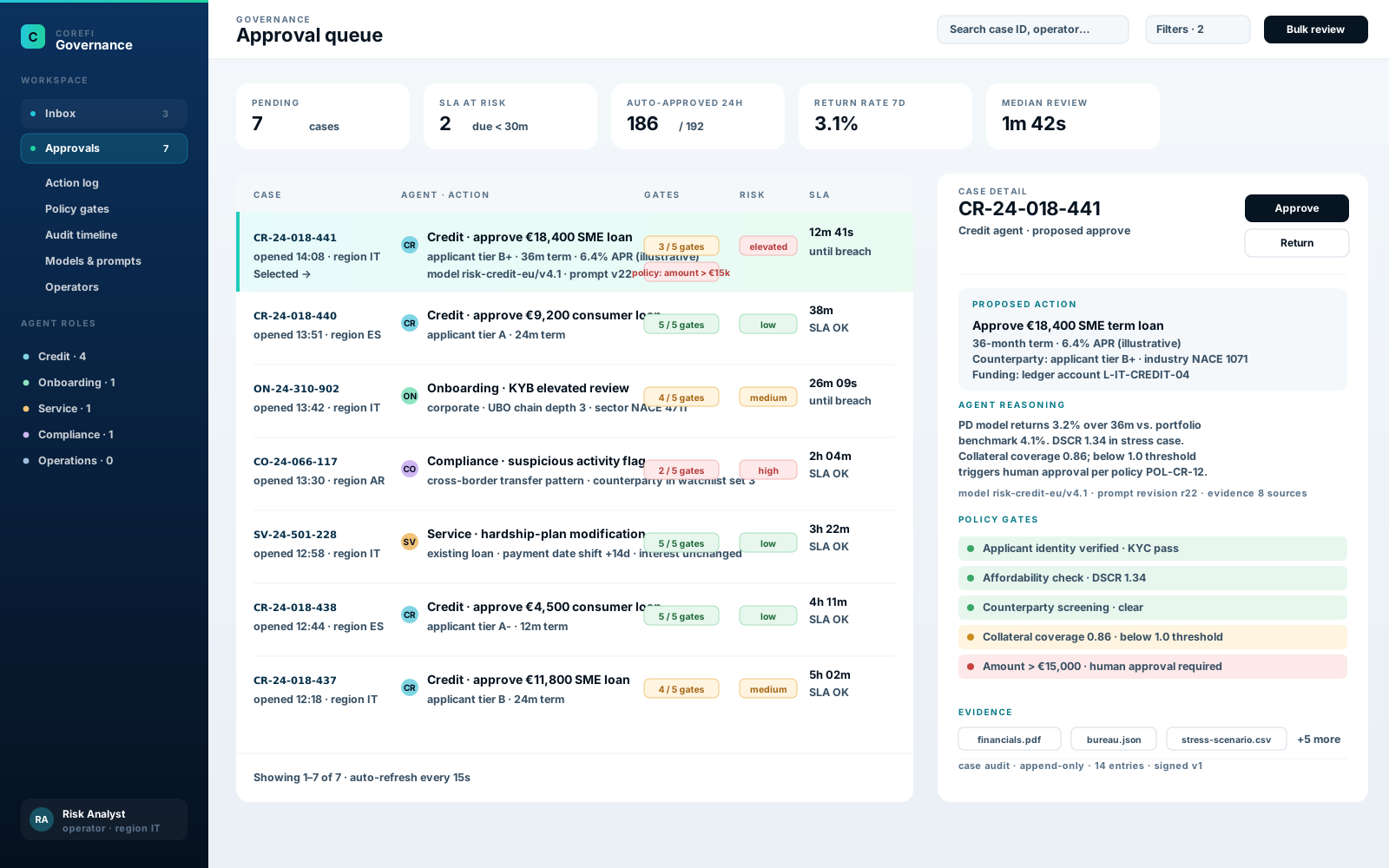
CoreFi AI Governance approval queue: 7 pending agent-proposed actions scored against policy gates, with one selected case and approve / return / escalate controls. Illustrative data.
Approval queue — every agent-proposed action paused for a human when a policy says so. Illustrative data.
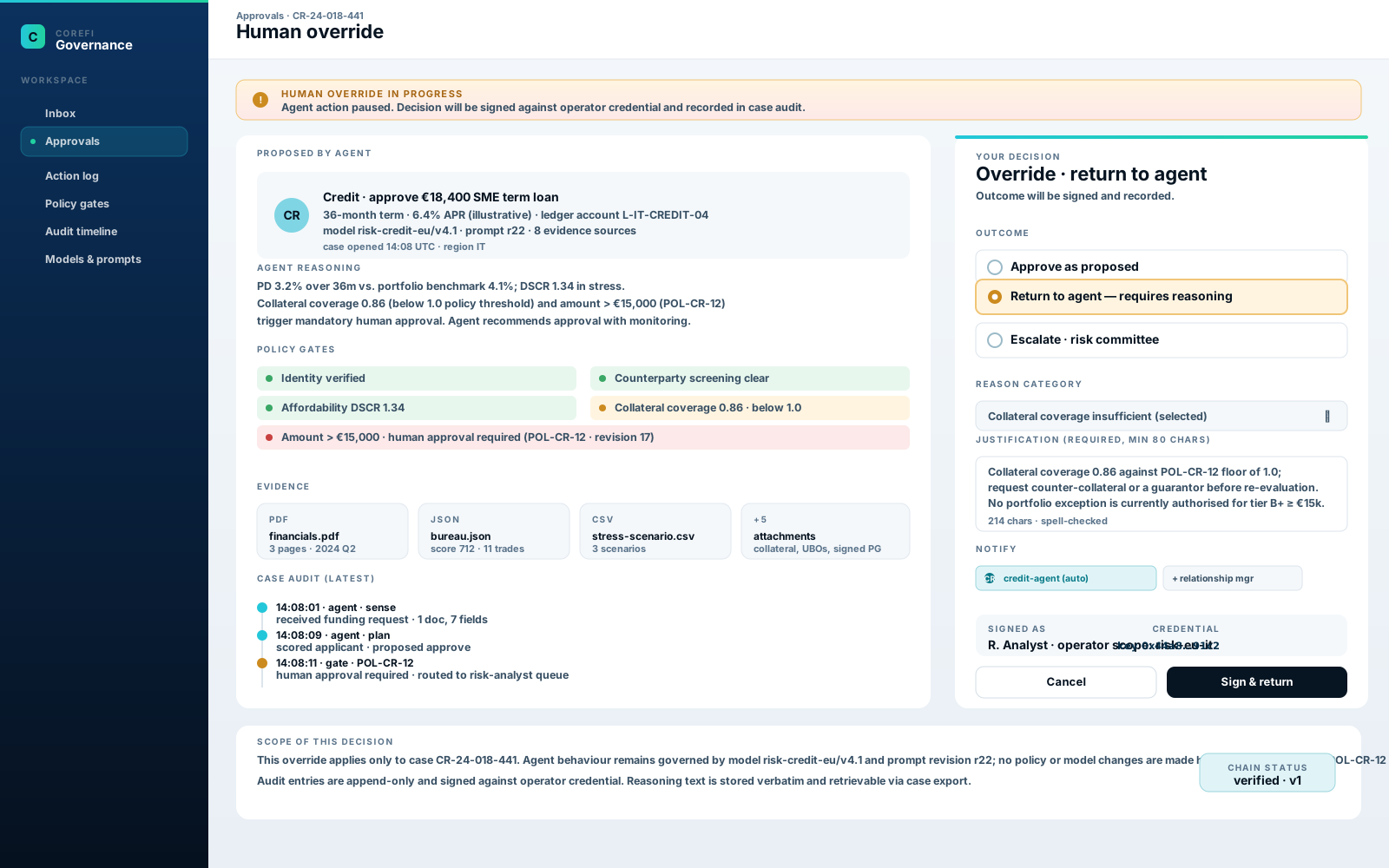
Human override flow: a reviewer returns an agent-proposed loan with a signed reasoning note. Illustrative data.
Override flow — the reviewer hand-back, with a structured reasoning note recorded. Illustrative data.

Sense & Plan

The agent reads the case, retrieves the relevant data through scoped APIs and produces a structured plan — not free-text. The plan is auditable and reviewable before any side effect.

Check

The plan runs through policy gates: scoped permissions, transaction and exposure limits, customer-segment rules, jurisdictional restrictions and human-approval thresholds. Anything that fails the gate stops, with a structured reason.

Act

Only the actions that passed the gate execute — through the same governed APIs a human operator would use. No agent has uncontrolled write access or out-of-band ledger authority.

Audit

Trigger, retrieved data, model and prompt version, plan, policy outcome, API calls, ledger effects, escalations, human decisions and final state — one immutable record per workflow, exportable in standard formats.

Escalate

Anything outside policy, outside threshold or marked for human review is escalated with the full case context. The reviewer sees a structured packet, not a model conversation.

Learn

Outcome data feeds back into the agent under a documented evaluation regime. Changes to prompts, models or policy are versioned and reviewable; the audit record links the workflow to the version that produced it.

What ships as evidence

An evidence pack designed to support audit — available on request.

CoreFi is platform infrastructure; the licensed activity and the regulatory perimeter sit inside the customer's entity. The evidence below is what the platform produces as a by-product of running AI workflows, and what is available to support internal audit, second-line review and supervisory request. The detailed posture lives in /trust-center.

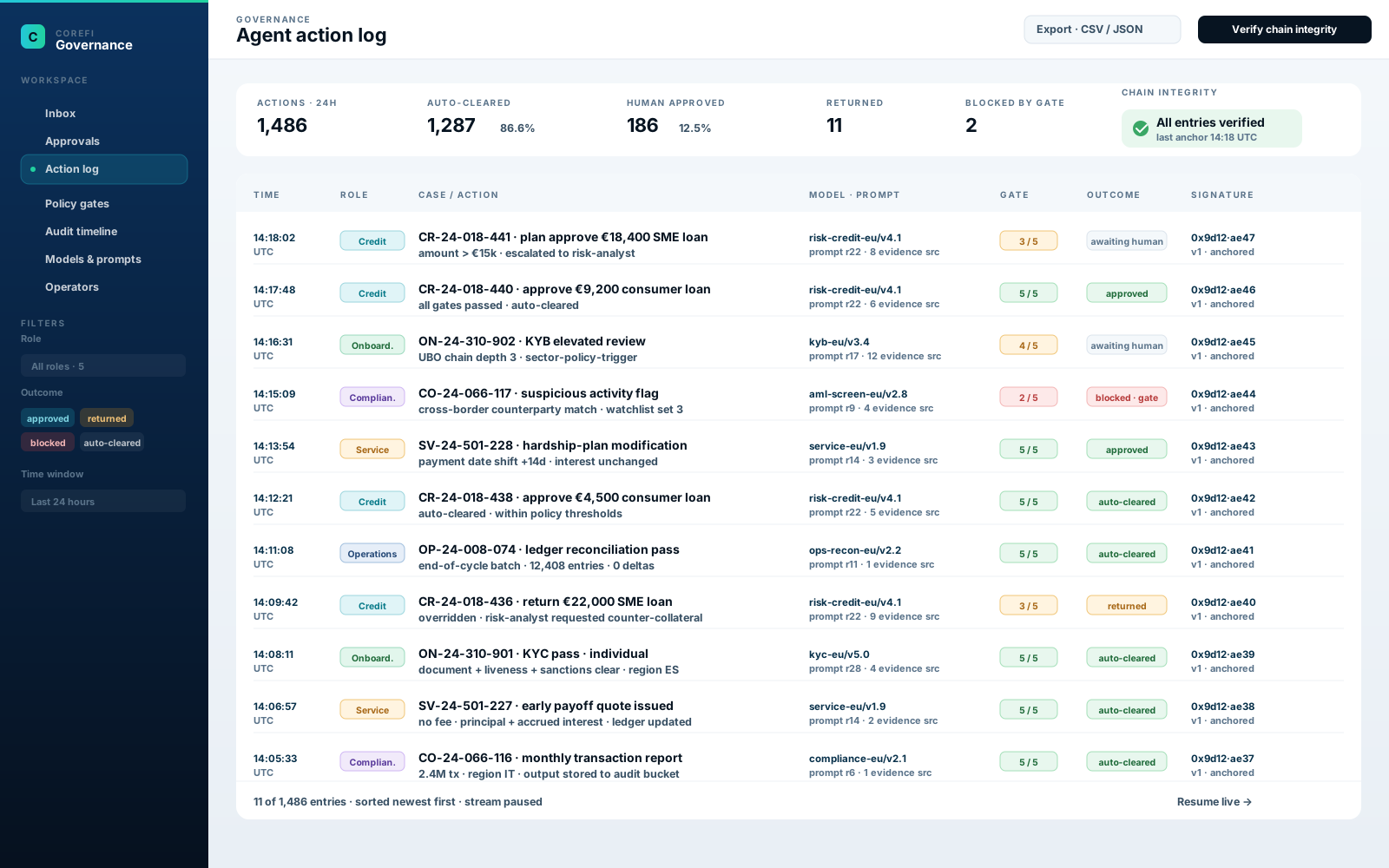
Append-only AI agent action log: 11 entries over 24 hours with role, model and prompt version, policy gate verdict, outcome and signed hash. Illustrative data.
Append-only action log — per-workflow case-level record with model and policy verdict. Illustrative data.
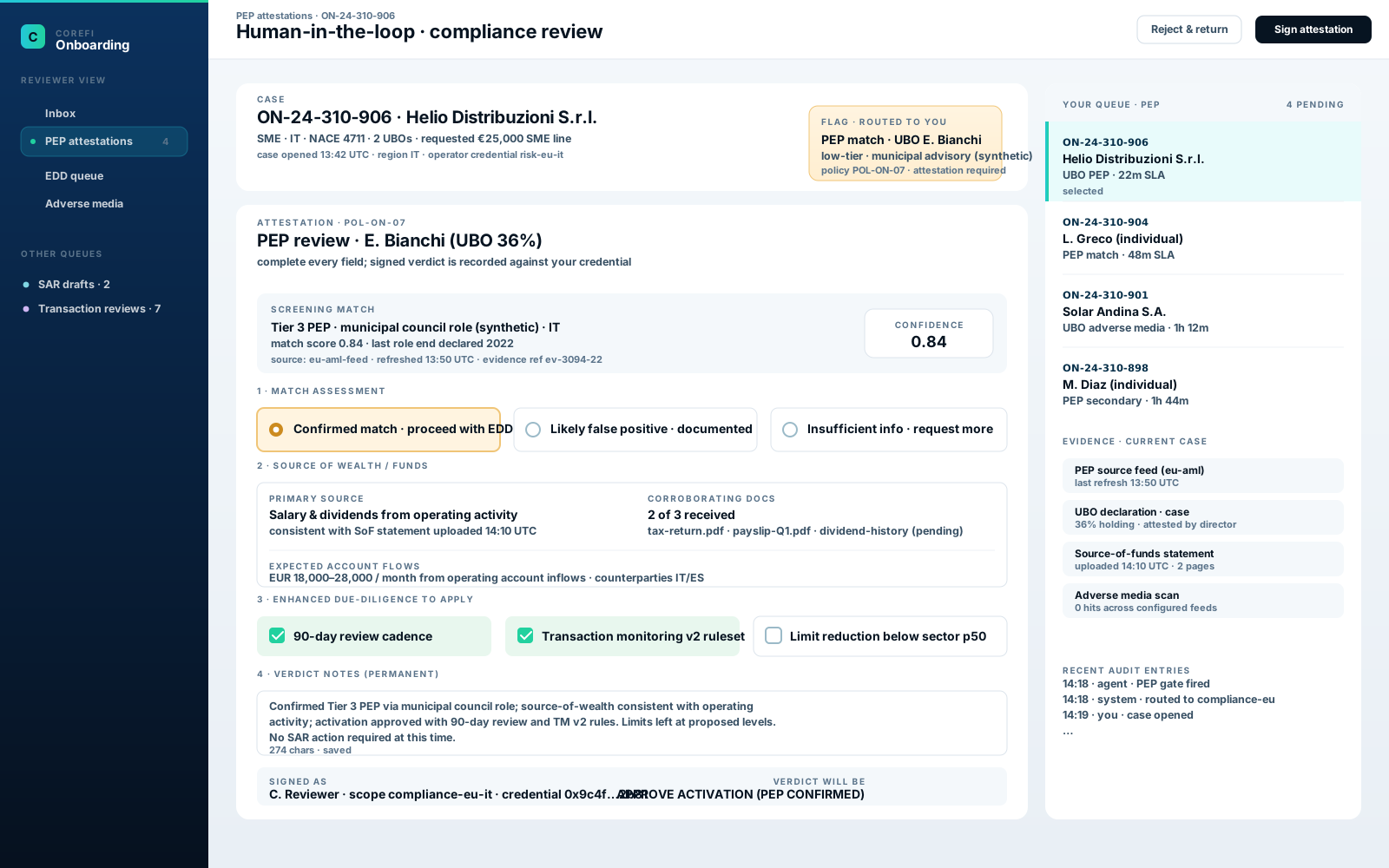
Compliance reviewer attesting on a PEP-flagged onboarding case: match assessment, source-of-wealth, EDD requirements, signed verdict. Illustrative data.
Human attestation — reviewer verdict with EDD requirements and signed reasoning, exported into the case record. Illustrative data.

Audit record export

Per-workflow immutable record across every agent and human action, exportable through documented APIs in standard formats. Designed to support internal audit, external audit and supervisory request.

Policy pack

Scoped permissions, transaction limits, segment rules, jurisdictional restrictions and human-approval thresholds — defined ahead of the workflow and available on request as a documentary artefact, not an implicit configuration.

Model and prompt versioning

Model version, prompt version, evaluation regime and change history captured in the audit record. Designed to support model-risk-management style reviews aligned with your institution's framework.

Integration via configured providers

Sanctions, PEP, ID verification, bureau data and similar integrations run through configured providers under your contractual perimeter. CoreFi orchestrates; the provider remains the source of record for the data it supplies.

Data residency and access

Deployment shapes designed to support regional data residency and least-privilege access to customer data. Specific posture available on request and documented in /security-compliance.

Exit posture

Customer, account, ledger and audit data exportable in standard formats. Each adoption path in /implementation has a defined exit posture; Managed Platform includes off-boarding terms in the service contract.

Production proof — shared across all CoreFi customers

What you'll inherit from a platform already running in production.

The figures below match the home-page proof bar and /in-production. They are taken from production CoreFi deployments and reflect what is operationally true today, not a forward-looking roadmap.

20+Production deployments across banks, lenders and fintechs.
200k+End-customer accounts running on CoreFi rails.
99.9%Platform uptime measured against operational SLOs.
6Live geographies — Italy, Spain, France, Argentina, Chile, Bolivia.
8–10 wksAverage go-live for a first banking journey on CoreFi.
HundredsEcosystem integrations across KYC, payments, scoring and data.

Walk through your AI governance posture with our team.

Bring your model-risk-management framework, your audit committee's questions and the AI use cases your supervisor has asked you about. We will walk through how CoreFi's policy gates, scoped permissions and audit record map to your control framework — and what evidence is available on request for each control. We do not give legal or regulatory advice; we describe how the platform supports the posture your compliance team has to defend.

See the Trust Center →